Why the Legacy Lock Trust Exists
Most legacy plans are built for death and don’t include you. This article explains the gray zone in between, and why that is where families

Legacy Lock helps you prepare for the quiet phase before that, so that your wishes, your financial dignity, and your independence are protected by design, not by crisis.
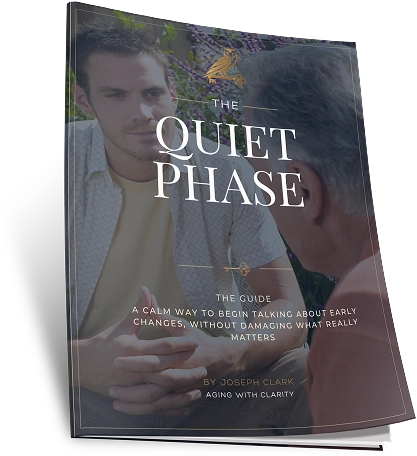
A practical 5-step guide to help you spot what most families miss, start the right conversations, so that you can protect your financial dignity before crisis forces the issue.
Most people think legacy planning is about documents, taxes, and what happens after they are gone. They assume that once the papers are signed, the job is done.
But for many families, the greatest risk begins earlier, during the quiet phase of aging, when judgment may be changing even though legal authority has not.
That is where confusion grows, relationships strain, and years of wise decisions can begin to drift.
Through Joe’s 3WHY method, we help you clarify what you own, who benefits, who’s in charge, and what happens if support is needed while you are still alive and still deserving of dignity.
Estate planning is for those preparing to die. Legacy planning is for those preparing to live. When you prepare early, you protect more than assets. You protect your independence, your family, your voice, and the values you want carried forward.
You are invited to join our Aging with Clarity community, where you get access to videos, learn what, when, and why you need to consider more than traditional “estate planning” documents.
For nearly four decades, I’ve helped more than 2,500 families navigate retirement, life transitions, and the decisions that shape what they leave behind.
Along the way, I saw something most people and planning miss: the greatest threats to a legacy rarely begin at death. They often begin earlier, when something subtle starts to shift and families do not yet have the language or structure to respond well.
I often call myself a Legacy Architect who is passionate about helping people protect their financial dignity, preserve their independence, and create clarity for the people they love.
I’m committed to giving you practical guidance and thoughtful structure so that you can remain the one setting the course, without leaving your family guessing, scrambling, or forced into conflict when it matters most.
Legacy Lock is about saving Thanksgiving during and after my life. Maintaining my financial dignity is not only important to me but also to my kids. They don’t want to put diapers on me or steal the checkbook.
Joe has also been instrumental in helping us with the legacy planning and unique challenges that many families face. Joe is more than a fiduciary. He is the definition of trust. He has earned our firm belief in his integrity, ability, and character. We are totally reliant on him.
Joe’s knowledge of the tax code and estate planning provided me with the confidence to refer my closest friends and clients to his firm. I am retired, but I still watch and engage with many of those families. I have no regrets about partnering with Joe personally or professionally. The most important thing to me in our relationship has been our shared faith and how that faith guides our decisions.

Most legacy plans are built for death and don’t include you. This article explains the gray zone in between, and why that is where families

Learn why judgment can begin to change before legal authority does, and how thoughtful guardrails can preserve dignity without creating fear or conflict.

Discover the framework Joe uses to help families clarify what they own, who benefits, who’s in charge, and what happens if support is needed.

Legacy Lock begins with one powerful framework:
Joe’s 3WHY method, (three Who’s, a How, and What About YOU?). It helps you bring clarity to four essential questions before emotions run high and options feel smaller.
Get clear on what you own, how it is held, and whether it aligns with what you want to happen.
Clarify who should receive your legacy and what kind of structure may best protect them.
Choose the right people to step in with wisdom, willingness, and clarity when needed.
Answer the question most plans avoid: if support is needed while you are still alive, how should it happen, when should it begin, and who should help decide?
Answer the question most plans avoid: if support is needed while you are still alive, how should it happen, and when?
From there, families can choose the next step that fits where they are today:
Bring the Legacy Lock framework into your practice and help more families prepare before problems turn into confusion or conflict.
Joe Clark speaks on the quiet phase of aging, financial dignity, trusteeship, and the in-depth legacy conversations most families and professionals are not having early enough.
Whether he is speaking to families, advisors, attorneys, CPAs, fiduciaries, or organizations serving older adults, Joe brings nearly four decades of real-world perspective and a framework people can use immediately.
Families describe Joe’s guidance as wise, committed, and deeply clarifying, especially when the decisions feel complex and personal.
Over nearly four decades, I’ve had the privilege of helping more than 2,500 families navigate retirement, major life transitions, illness, loss, and the decisions that shape what they leave behind.
For much of that time, I saw the same assumption over and over again: people believed the biggest threats to their legacy would come from markets, taxes, or what happened after they passed away.
What I kept seeing was a quieter, harder season. A season where something subtle began to change before anyone had clear language for it. Judgment shifted. Confidence wavered. Financial decisions became more vulnerable. Families sensed something was off, but they did not know how to step in without creating conflict, embarrassment, or the feeling that they were taking control away.
And the systems around them were not built for that middle ground.
Most plans waited for a diagnosis. Or a declaration of incapacity. Or a full-blown crisis
I came to believe that legacy planning should not begin with death. It should begin with life. It should help people protect their financial dignity while they are still here. It should create clarity before fear takes over. And it should give families a way to increase support gradually, thoughtfully, and respectfully, instead of forcing a sudden transfer of control overnight.
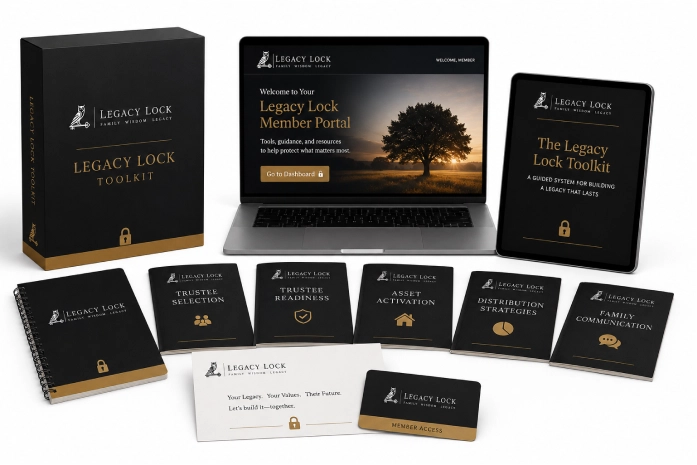
I created Legacy Lock to turn that clarity into structure. It helps families think through what they own, who benefits, who is in charge, and what support should look like if it is ever needed. It helps people prepare trustees, communicate intentions, and put thoughtful guardrails in place while the person at the center of the plan still has a voice in how that plan should work.
It is about making sure your wishes are not guessed at later because they were spoken clearly now. It is about protecting the relationships that matter most. And it is about helping your decisions today still reflect your values tomorrow.
If you are here because you want a calmer, wiser, more human way to prepare for what lies ahead, you are in the right place.